What on earth is a Magic Coffee?
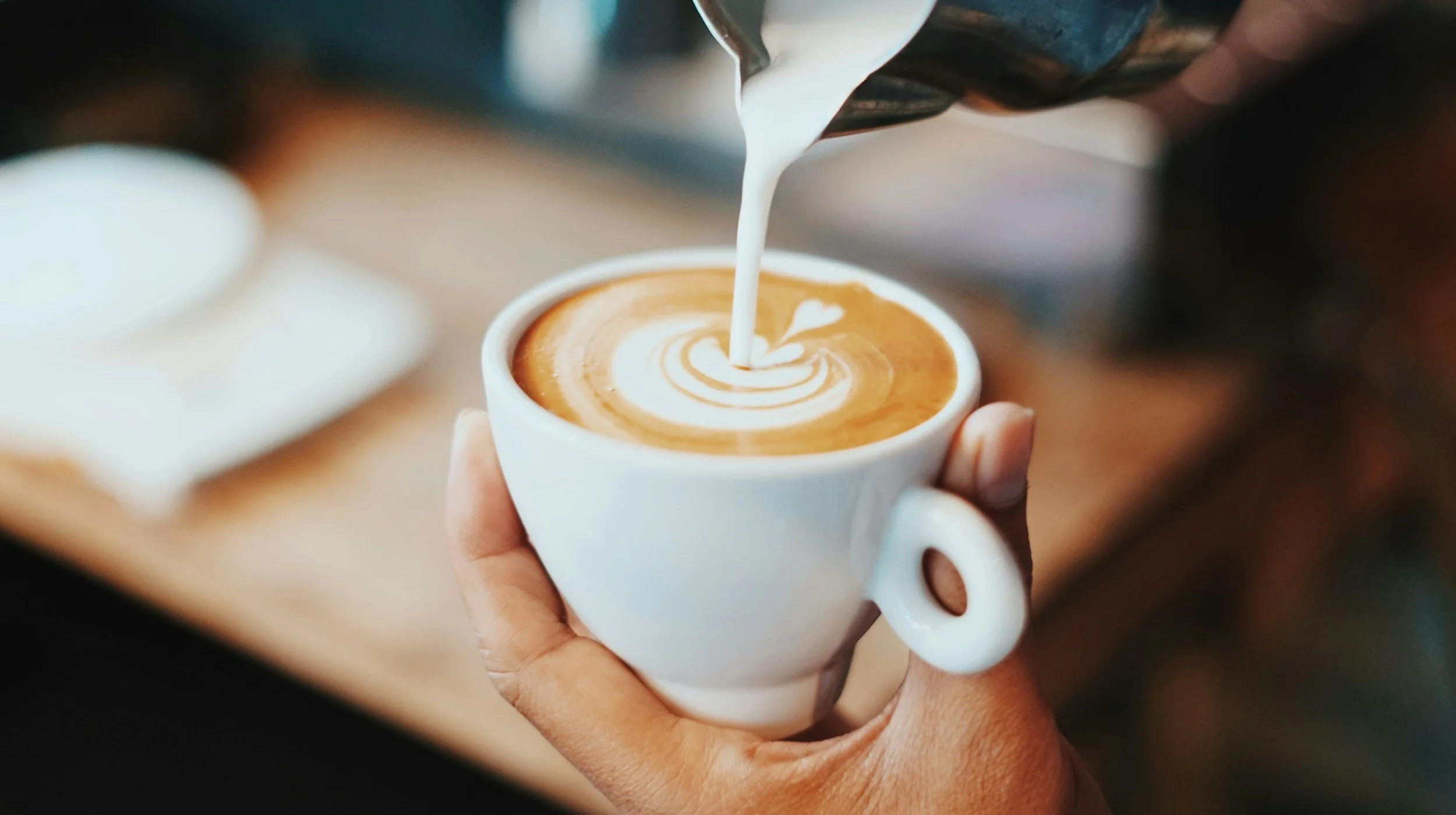
‘Melbourne’ and ‘coffee’ are two words often found residing in the same sentence. And with ‘devotion’ or ‘obsession’ often lurking nearby, it doesn’t take too long before you start to get a picture of the city’s relationship with the popular beverage. There are close to 3,000 cafés across the metropolitan area today, and for a large part of the population a stop-off at their favourite on the way to work is all part of the daily routine.
But the city’s passion for the ubiquitous brew is not just a recent phenomenon. Coffee stalls were an established feature of the city’s streets in the nineteenth century. By the 1870s, the sight of mobile coffee carts being rolled into the city after dark had become a nightly occurrence, and the comfort they provided via their steaming cups was welcomed by everyone from the wealthy theatregoer to the unfortunate vagrant.
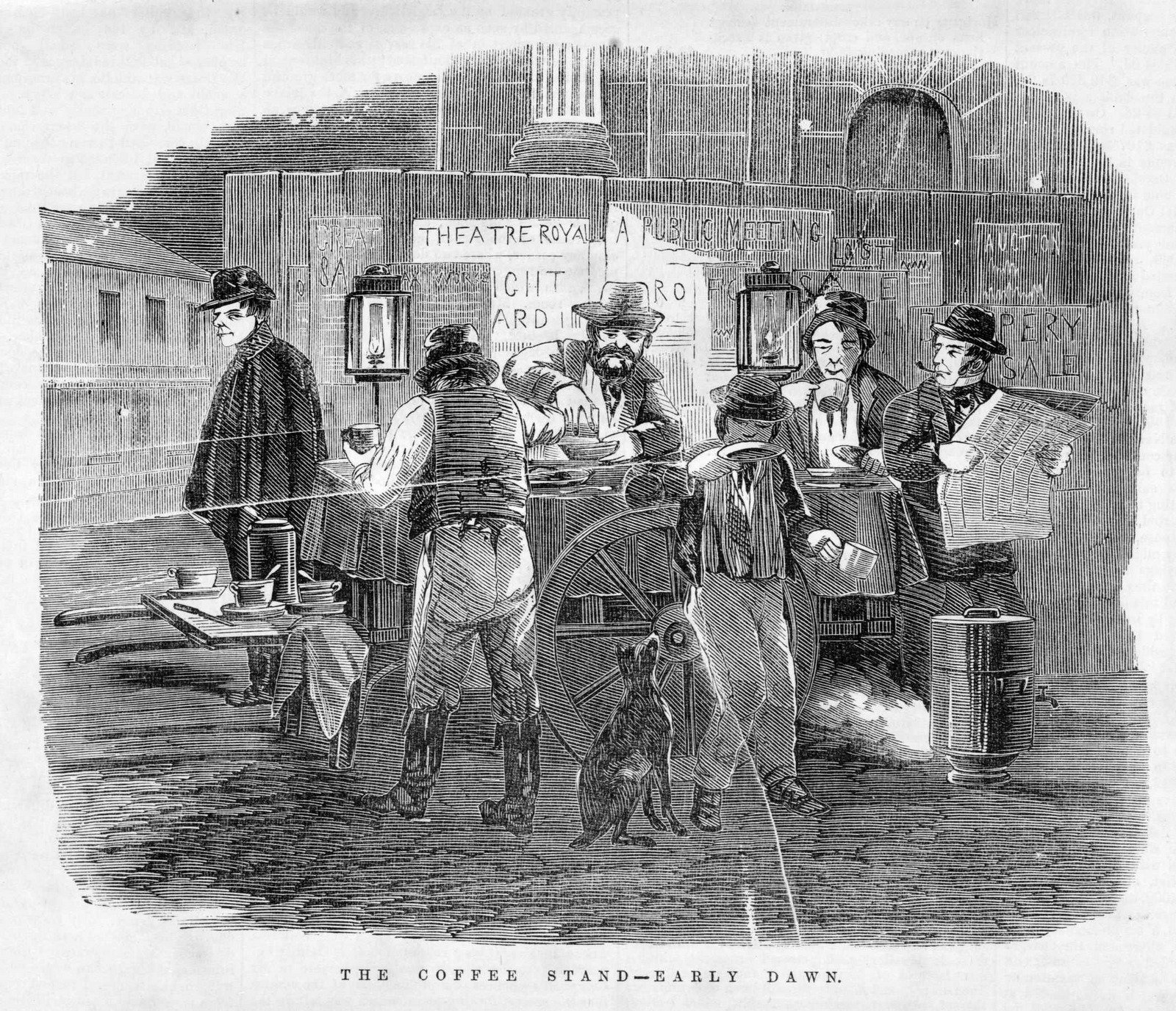
Nightly coffee stand, Melbourne, 1863. Image courtesy State Library Victoria
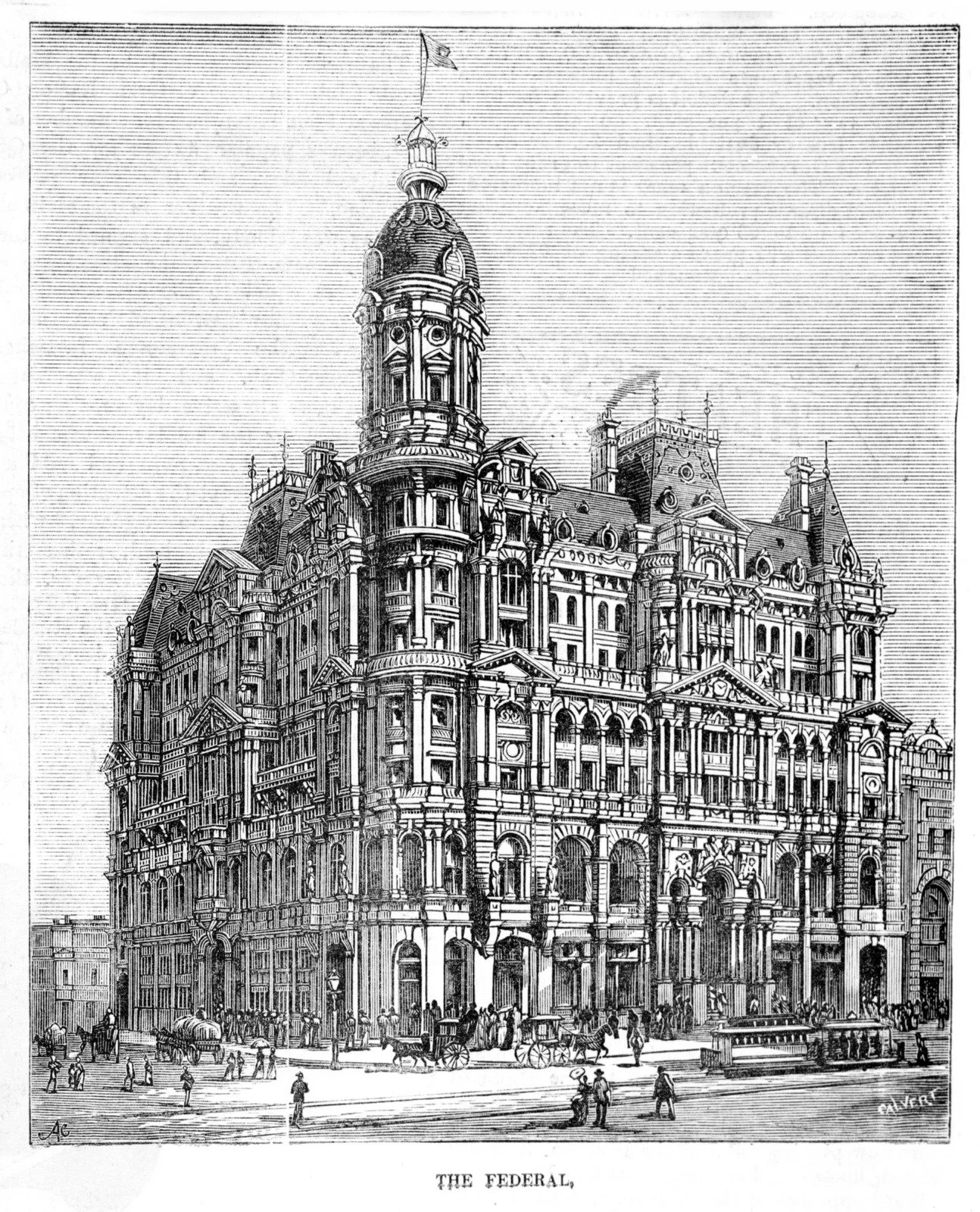
The Federal Coffee Palace stood for 85 years before being demolished in 1972. Image courtesy State Library Victoria
In the 1880s coffee palaces began to appear. These grand edifices rivalled the best liquor-filled hotels. They were built, promoted and frequented by adherents of the temperance movement, who saw alcohol as an evil to be avoided and coffee consumption as a safe alternative.
It was the “populate or perish” migration policy following the Second World War however that brought continental European traditions to Melbourne on a level not previously seen. The Italians and Greeks who settled here in the 1950s quickly established restaurants and cafes reminiscent of their homelands, ensuring the coffee culture they brought with them would soon become entrenched in their adopted city.
And that tradition continues today. The onslaught of coffee chains that have taken over much of the western world in recent decades have been less successful here. It took Starbucks a persistent 23 year in Australia before they turned a profit, and that only came about after they closed most of their Melbourne stores. Australians – and Melburnians in particular – continue to be loyal to independent cafes while shunning the corporate run franchises. And this is not because everyone is being altruistic; we just know it’s the small guys who make good coffee.
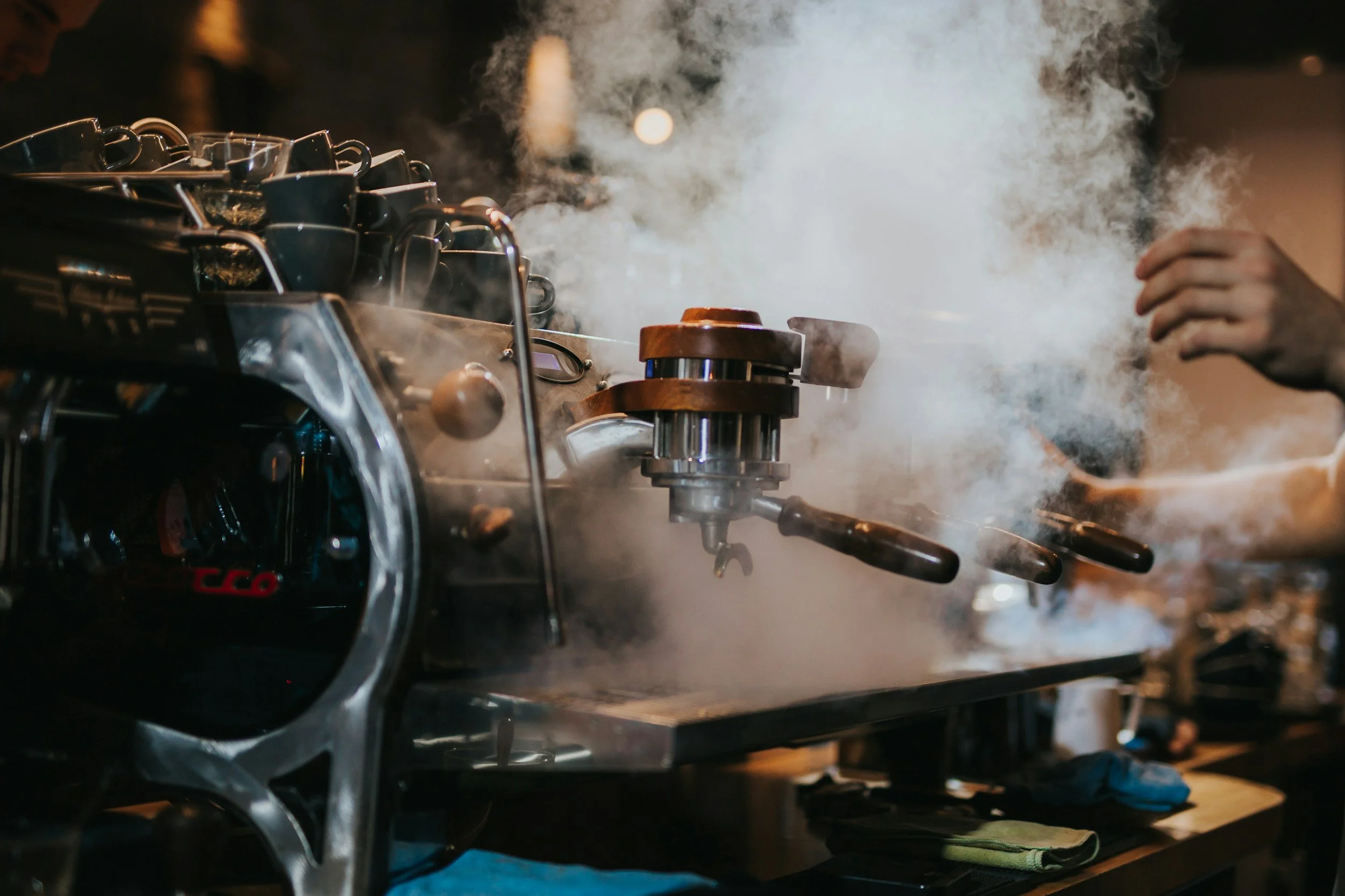
In Melbourne today, it’s Italian-style coffee that dominates. Something that is created using an espresso machine. You can probably get filter or percolator coffee somewhere, but I’ve never looked.
So, this brings us to the newest version of coffee gaining popularity: the Magic. Of course, Magic doesn’t even sound like a coffee. The lack of a vowel at the end of its name (c.f. espresso, cappuccino, or macchiato) is a dead giveaway that it’s not Italian in origin. And that’s because it was in fact created in Melbourne. While exactly who first produced it is in dispute, its growing popularly is not.
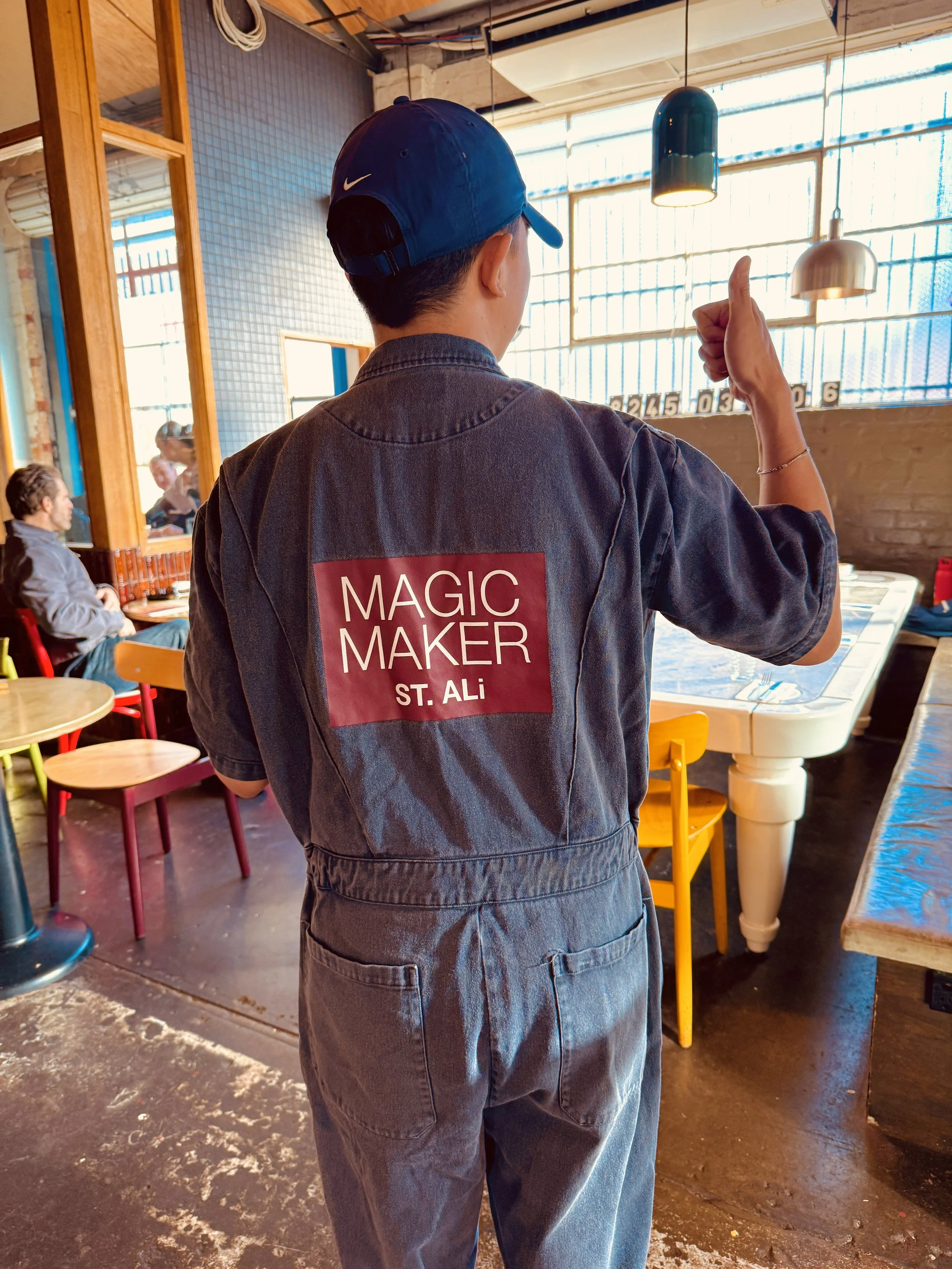
Staff member at ST. ALi Coffee Roasters South Melbourne. The grungy, garage-like feel of this place is further enhanced by the staff uniform. “Magic Maker” is a nod to the coffee which, according to some accounts, originated here.
A Magic is defined as a double ristretto topped up with a thin layer of microfoamed milk. For the uninitiated, a ristretto is a smaller, stronger shot of coffee than a standard espresso. And the milk that’s added to two of these shots is steamed in the same way as for a flat white, as opposed to that of a cappuccino which has macrofoam and sits on top. The result is a hard-hitting rich but creamy concoction that barely fills a 4-oz cup but goes down with satisfaction thanks to the lack of bitterness that often accompanies larger coffee drinks.
Magics are slowing catching on elsewhere in Australia. Earlier this year my wife and I stopped by a café while travelling through a small town in southern New South Wales. “Do you do Magics?” she enquired. “Yes,” came a less than confident reply. A fair coffee was delivered 10 minutes later, though my wife swears she saw the barrister googling it beforehand to find out what was expected.
While current cost of living pressures have forced many people to reevaluate their expenditure on nonessential indulgences – think holidays, restaurants and theatre tickets – sales of café coffee have remained reasonably strong. At A$5 – $6 a cup, coffee is what economists call an ‘affordable luxury’. And as such, Melbourne’s love affair with it is unlikely to come to an end anytime soon.
🎧
Learn more about the former Grand Coffee Palace (now the Hotel Windsor) and see one of Melbourne’s first post war CBD cafes in my self-guided audio tour, Gold, Ghosts & Grit